A walk-in that is reading high has usually been heading that way for a while. Refrigeration fails slowly. The box loses a degree, then holds there for a few weeks, then loses another, and because nothing dramatic happens on any given day it is easy to keep meaning to deal with it.
Deal with the product before you deal with the equipment. BC's Food Premises Regulation sets a ceiling of 4°C for cooler storage and −18°C for frozen, and your own food safety plan should say what your premises does when a box stops holding. Follow that first, then work out why. If the box has stopped cooling altogether, start with what to do in the first hour.
Once the product is handled, the diagnosis is usually one of four things.
If there is heavy ice on the evaporator coil, shut the circuit off before doing anything else. Fans running into built-up ice can shatter a blade, and the pieces come out fast. This is the one part of walk-in troubleshooting that can injure somebody, and it takes ten seconds to avoid.
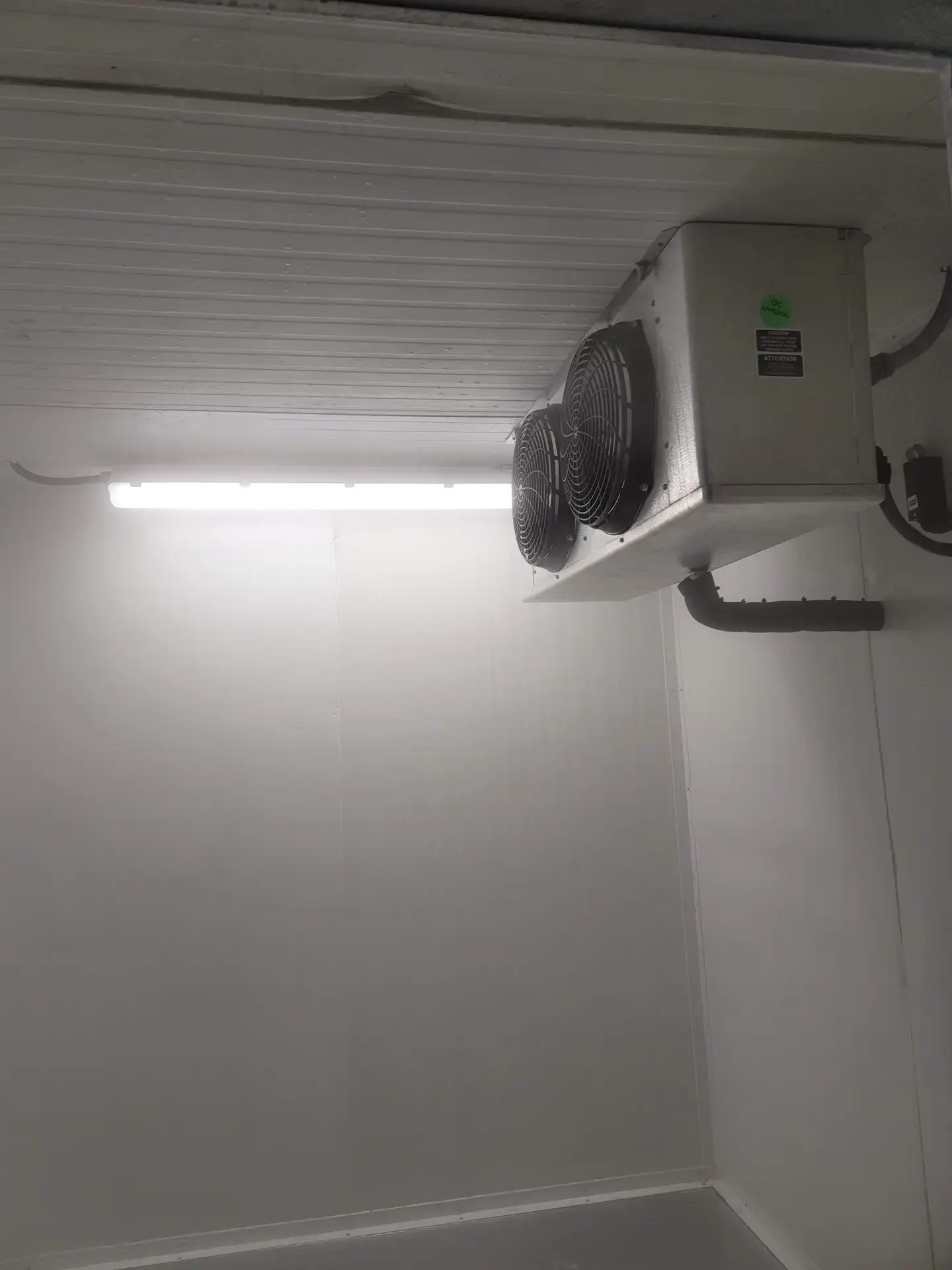
The evaporator is the unit mounted inside the box, the one with the fans. Its job is to pull heat out of the air, and ice on it means warm humid air is reaching the coldest surface in the room and condensing there.
That matters because ice is almost never the root problem. It is the visible result of one. The more ice forms, the less air moves across the coil, and the less air moves, the more ice forms. So a fuzzy white coil tells you something else is wrong and points you at where to look: on a cooler, usually the door. On a freezer, usually the defrost system.
What you can check: a light even frost on the coil is normal. A coil that is fuzzy white, or has visible ice on the fins or the fan guards, is not.
Every time the door opens, warm humid air enters. That is normal and the system is built for it. What it is not built for is that happening continuously through a gap nobody can see.
Gaskets tear, compress and harden. Hinges sag. Door closers fail. Any of those leaves the box leaking around the clock, which shows up as a coil that keeps icing, a unit that never cycles off, and a temperature that will not come down no matter what the thermostat says.
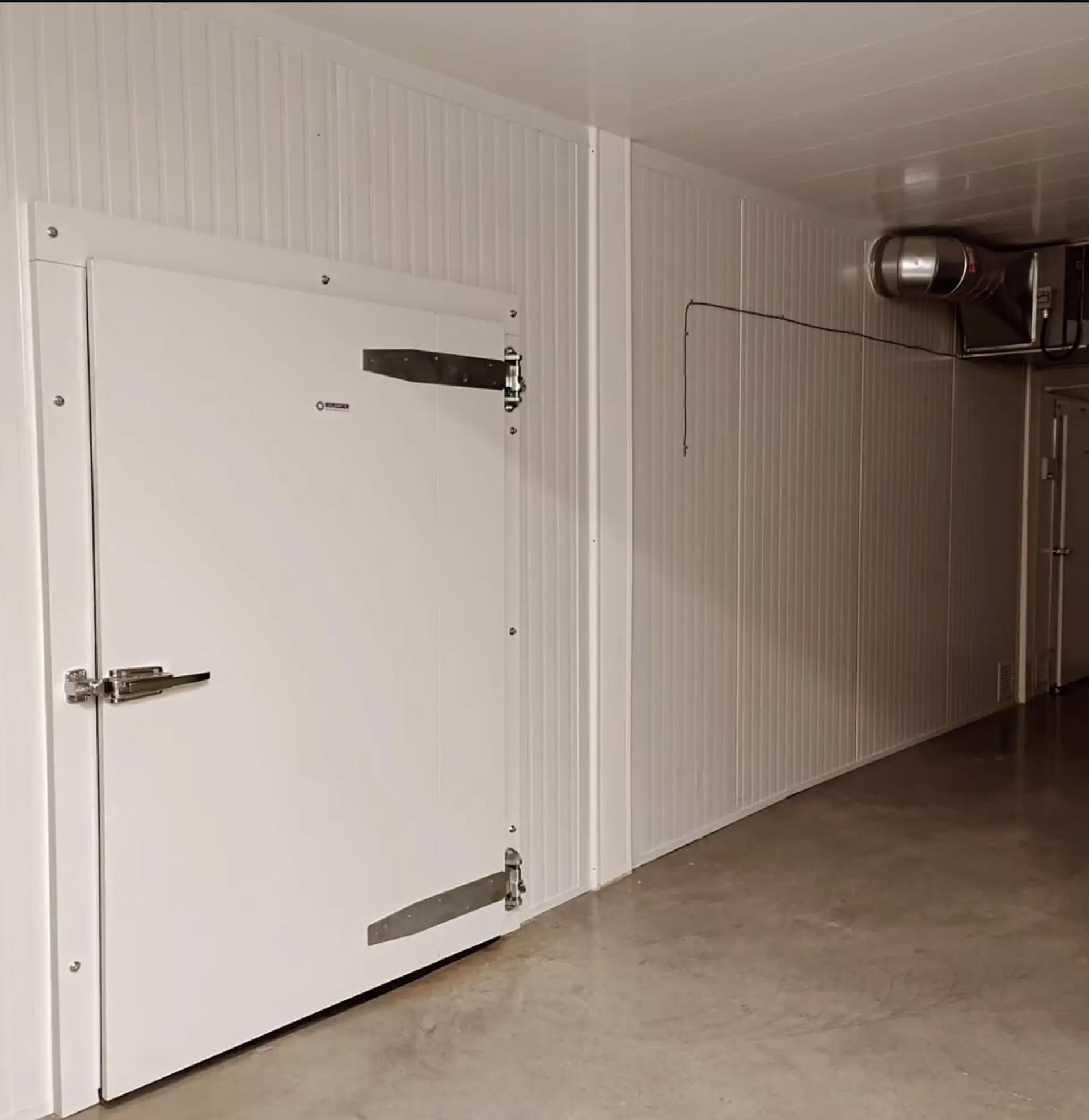
What you can check: close the door and look for light around the edges. Run your hand along the gasket for cracks and flat spots. Check whether the door swings shut on its own or needs a push. On a freezer, ice forming around the door frame or on the threshold is a sign in itself.
The condenser is the other half of the system, usually outside the box or on the roof, and its job is to dump the heat the evaporator collected. It does that by moving air across fins.
When those fins pack with dust and kitchen grease, the heat has nowhere to go. The compressor runs longer and harder trying to reach a temperature it cannot hit, the box drifts up, and in the worst case the compressor fails outright. This is one of the most common causes of a commercial box not holding temperature, and it is entirely preventable.
What you can check: find the condensing unit and look at it. If you cannot see through the fins, that is your answer. Commercial kitchens are hard on condensers, because grease turns ordinary dust into a coating rather than a layer.
Evaporators need air moving freely across them. When a delivery gets stacked in front of the unit, or shelves get loaded to the ceiling, or plastic wrap ends up over a return path, the fans cannot move air through the room.
The result looks like a refrigeration fault but is not one. Some parts of the box hold temperature, others sit warm, and the coil ices because the same air keeps recirculating past it.
What you can check: clear the space around the evaporator and keep it clear. This is the cheapest fix on this list and the one most likely to get undone the next time a big delivery lands.
Freezers are built to frost up and then melt it off on a schedule. An electric defrost system runs heaters on the coil, stops when the coil is clear, then waits for the coil to get cold again before restarting the fans.
Several things in that chain can fail. A defrost timer can stop initiating cycles at all, or initiate them and terminate too early, leaving ice behind that builds a little more with every cycle. A heater can fail. A termination sensor can fail. A drain line can freeze, so melt water backs up and refreezes instead of leaving.
None of that presents as a single dramatic failure. What you see is a freezer that frosts up faster than it used to, ice on the ceiling, or water on the floor near the unit.
What you can check: notice the pattern. Frost that keeps coming back after being cleared is a defrost problem, not a cleaning problem, and no amount of chipping ice off the coil will fix it.
Cleaning a condenser, clearing space around the evaporator, checking gaskets and watching for patterns are all owner work. They are also where most of the value is, because these are the failures that stay cheap when they are caught early.
Past that point it stops being maintenance. Diagnosing what is actually wrong inside the system needs gauges, training and certified refrigerant handling, which in BC is a compulsory trade certification rather than an optional credential. Opening up a defrost timer, adjusting a metering valve, or topping up refrigerant without knowing what you are reading can turn a service call into a replacement, and refrigerant under pressure is genuinely dangerous.
The rule of thumb: if the fix is cleaning something or moving something, it is yours. If the fix involves the sealed system or the electrical controls, it is not.
All of this is easier to catch when you know what the box normally reads. We wrote a companion piece on the temperatures BC requires a cooler and freezer to hold and what your own food safety plan should say about a failure.
If yours is drifting now, Air Comfort Systems handles commercial refrigeration across Metro Vancouver, including walk-in coolers, freezers and display cases.
commercial refrigerationwalk-in coolerswalk-in freezerstroubleshootingvancouver