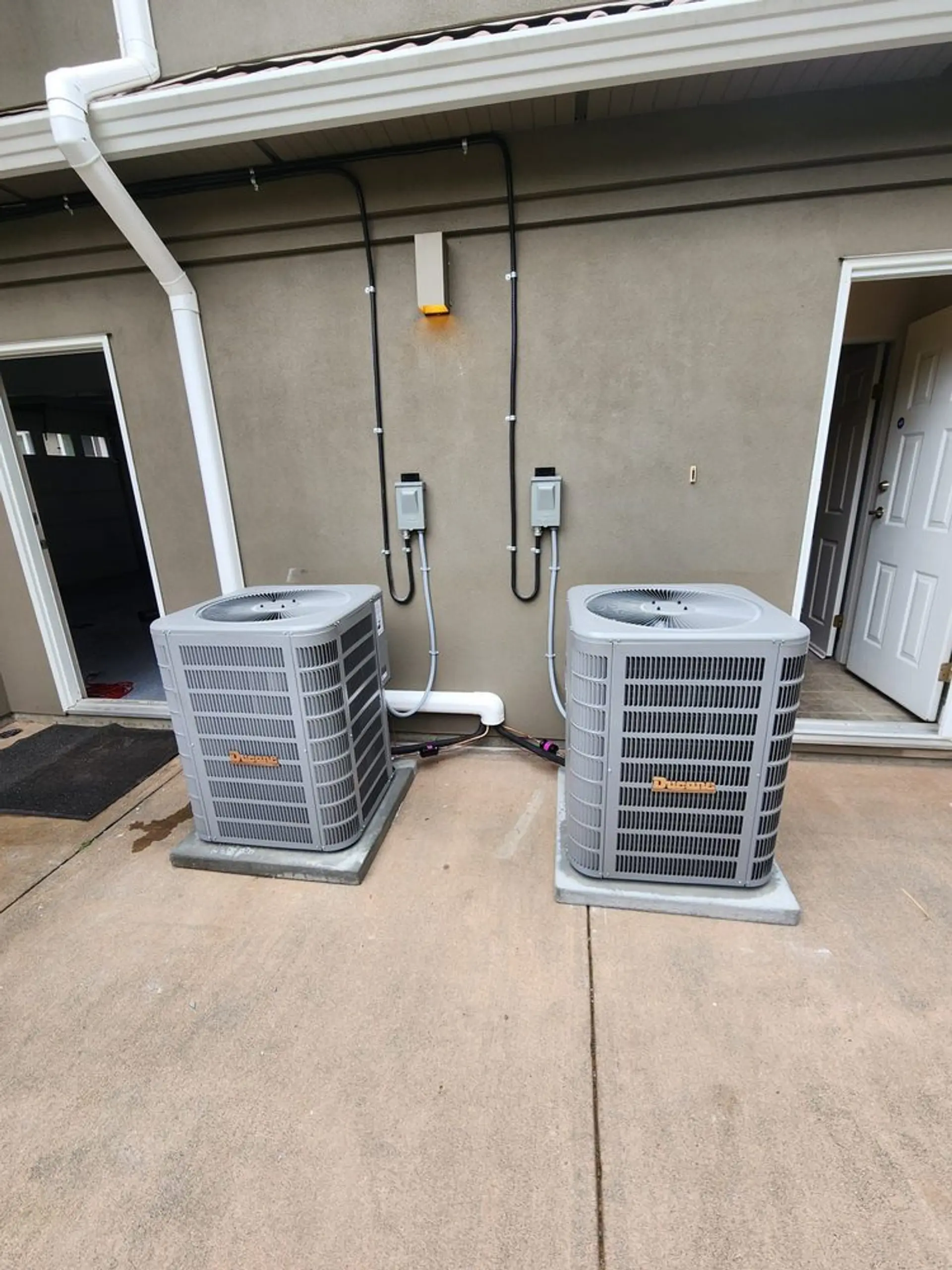
It is August, the unit outside has been running most of the day, and it sounds
different than it did last summer. A bit louder. Maybe a rattle that was not
there before.
Most people put up with it, or assume the system is on its way out. Usually it
is neither. A louder unit is normally telling you one of two things, and the
difference between them matters.
Something has worked loose. Annoying, cheap to fix, tends to get worse.
The system is working harder than it should be. That one is already showing
up on your hydro bill, and the noise is just the part you happened to notice.
ENERGY STAR's guidance is blunt about this. Dirty coils reduce a system's
ability to cool your home, which makes it run longer, increases energy costs,
and reduces the life of the equipment. Refrigerant works the same way. Too much
or too little makes the system less efficient, again driving up costs and
shortening equipment life.
Notice that none of that describes a sound. It describes runtime.
A system that used to cool the house and shut off is now running through the
whole afternoon. It might not be a single decibel louder at any given moment.
You are simply hearing it far more of the time, and paying for every minute of
it.
That is why "it seems louder this year" is worth taking seriously. It is often
the first symptom you notice of something that has been quietly costing you for
a while.
The other cause is mechanical wear, and the City of Vancouver spells this one
out in its own guidance for heat pumps and outdoor mechanical equipment. Noise
from fans and motors increases over time without periodic maintenance, because
parts like bearings wear and screws work loose enough to rattle.
Same guidance also tells owners to keep the coils clear of dirt and debris and
change the filter regularly, which is the overlap between the cheap problem and
the expensive one.
- A rattle or buzz that comes and goes. Something loose. A panel, a
fastener, a fan guard.
- A steady low drone that has always been there. That is the compressor.
Normal.
- Running noticeably longer than last year. This is the one that costs you.
Airflow, a dirty coil, or refrigerant.
- Grinding or screeching. Not a wait-and-see. Shut it off and call someone.
Worth knowing if a neighbour has said something, or if you are worried one
might.
Vancouver has regulated this since 1989. The Noise Control By-law sets
residential limits of 55 dB between 7am and 10pm, and 45 dB overnight. The part
most people miss is that those are measured at the property line, not at the
unit. Two identical systems on two identical houses can land on opposite sides
of the limit purely because of where they sit and what stands between them and
the neighbour.
The City's advice for placement is to keep the unit as far from the property
line as possible and to favour the front or rear yard over the side yard, using
fences, hedges, or landscaping as barriers. Their rule of thumb is that if you
can see it, you can usually hear it.
On plenty of Vancouver lots, the side yard is the only place a condenser will
physically fit. That is a real constraint rather than bad work. When it is the
only option, what matters is keeping the unit away from the neighbour's windows,
mounting it on a solid base like a concrete pad with rubber dampeners to control
vibration, and using whatever barrier already exists.
Maintenance matters here too. A unit that has been serviced is quieter than one
that has not, which sometimes resolves a neighbour issue without moving
anything.
Louder is a symptom, not a diagnosis. Something loose is a nuisance. A system
running longer than it should is a bill. Neither one is usually a reason to
replace anything.
One note on picking who does the work. In British Columbia, the Ozone
Depleting Substances and Other Halocarbons Regulation says only an "approved
person" can service air conditioning equipment or buy refrigerant to do it. To
be approved you need the right trade credentials or be a registered apprentice,
plus an environmental awareness course approved by Environment Canada and the
province. The same regulation says refrigerant must not be added to equipment
that is leaking, so a quick top-up without finding the leak is not a fix.
Natural Resources Canada describes an air conditioner as a closed system that
does not release refrigerant when it is properly maintained. So if yours keeps
running low, it is losing it somewhere.
Air Comfort Systems installs and services central air and ductless mini
splits and heat pumps across Metro
Vancouver, with Red Seal certified technicians on every job.
air conditioningheat pumpsmaintenancevancouvernoise